Rural Real Estate Victoria: Your Comprehensive Guide to Agricultural Property Investment
Victoria’s agricultural sector offers some of Australia’s most productive and diverse farming opportunities, spanning from the high-rainfall districts of Gippsland to the irrigation country of the Murray Valley. When exploring rural real estate Victoria options, understanding the state’s regional variations, production systems, and market dynamics proves essential for making informed investment decisions. At Agribusiness Horizons, we specialize in facilitating agricultural property transactions throughout Victoria’s premier farming regions, bringing comprehensive market knowledge and technical expertise to every engagement. Our team understands the distinctive characteristics that make Victoria unique—from its water allocation systems to its diverse climate zones and sophisticated farming operations. Whether you’re an established farming family seeking expansion opportunities or an investor entering Victoria’s agricultural sector, our specialized approach ensures decisions backed by thorough analysis and deep regional knowledge. Contact us today to explore available agricultural properties and discover how we can guide you toward optimal outcomes in Victoria’s dynamic farming sector.
Victoria’s Agricultural Landscape and Regional Diversity
Victoria encompasses extraordinary agricultural diversity despite representing Australia’s second-smallest mainland state by area. This compact geography creates remarkable regional variation, with dramatic differences in climate, soil quality, water availability, and farming systems occurring across relatively short distances. Understanding these regional characteristics forms the foundation for successful agricultural property investment throughout the state.
The state’s agricultural history stretches back to early European settlement, when Victoria’s reliable rainfall and productive soils attracted farming families seeking prosperity. Over generations, sophisticated farming systems evolved to capitalize on regional advantages—irrigation schemes transformed semi-arid regions into productive horticultural zones, while natural rainfall patterns in southern districts supported intensive livestock and cropping operations.
Contemporary Victorian agriculture demonstrates remarkable sophistication across multiple sectors. Dairy production concentrates in high-rainfall coastal districts where pasture productivity supports intensive operations. Mixed farming dominates the Wimmera and Mallee regions, where grain cropping combines with livestock enterprises. Irrigation districts throughout northern Victoria produce diverse high-value crops including fruits, vegetables, and wine grapes. This sectoral diversity creates varied investment opportunities within the rural real estate Victoria market.
Understanding how regional characteristics influence property values, operational requirements, and investment returns proves essential when evaluating agricultural properties. Our Strategic Advisory & Consulting services help buyers navigate these complexities and identify properties aligned with their capabilities and objectives.
Major Agricultural Regions and Their Characteristics
Gippsland Region
Gippsland encompasses Victoria’s southeastern corner, where reliable rainfall and moderate temperatures create ideal conditions for pastoral agriculture. This region represents Victoria’s premier dairy country, with properties supporting intensive milk production operations that generate strong per-hectare returns. The landscape features rolling hills, productive soils, and established infrastructure that supports sophisticated farming operations.
Properties throughout Gippsland typically command premium valuations reflecting superior productivity potential and consistent climatic conditions. Pasture growth rates exceed those in lower-rainfall regions, enabling higher stocking rates and supporting profitable dairy, beef, and sheep enterprises. Water availability through reliable rainfall reduces irrigation dependency, though some properties incorporate supplementary systems to manage summer dry periods.
The region’s proximity to Melbourne provides both market access advantages and lifestyle appeal. Transport costs to processing facilities remain modest compared to more remote regions, while proximity to urban centers enhances property desirability for buyers seeking balance between commercial farming and accessible amenities. These factors contribute to competitive property markets where quality holdings attract strong buyer interest.
Western District
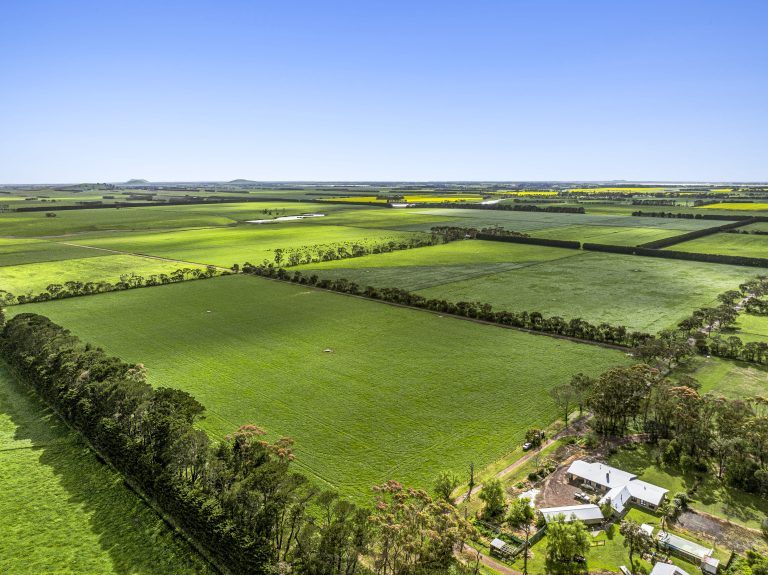
The Western District extends across Victoria’s southwest, encompassing prime agricultural land around Hamilton, Warrnambool, Colac, and surrounding areas. This region combines volcanic soils, reliable rainfall, and established farming infrastructure to support highly productive mixed farming operations. Properties range from intensive sheep and cattle enterprises to cropping operations and specialized wool production.
Volcanic soils throughout much of the Western District provide exceptional fertility and moisture-holding capacity that supports diverse farming options. Properties on these productive soils demonstrate superior performance across varying seasonal conditions and justify premium valuations. The region’s reputation for producing quality livestock and agricultural products enhances market positioning for farming operations.
Property scale throughout the Western District varies considerably, from relatively compact intensive holdings to larger mixed farming operations. This diversity creates entry opportunities across different investment scales, though competition for premium properties remains consistently strong. Understanding local market dynamics and property valuation drivers proves essential for successful acquisition.
Northern Irrigation Districts
Northern Victoria’s irrigation districts represent some of the state’s most intensive and productive agricultural regions. Areas including Shepparton, Cobram, Kyabram, and Swan Hill utilize Murray River water allocations to support diverse horticultural operations, dairy enterprises, and cropping systems that would be impossible under natural rainfall alone.
Water availability fundamentally determines property values throughout irrigation districts. Holdings with secure, high-reliability water entitlements command substantial premiums reflecting the productivity advantages irrigation provides. Understanding Victoria’s complex water allocation systems, including the distinction between high and low reliability entitlements, proves essential when evaluating irrigation district properties.
Infrastructure sophistication characterizes many irrigation properties, with established channel systems, laser-leveled fields, and modern irrigation equipment supporting efficient operations. Properties with superior infrastructure demonstrate operational advantages and typically justify premium valuations. Proximity to processing facilities, packing houses, and export logistics hubs further enhances property desirability for intensive horticultural operations.
Our Water Rights & Natural Capital Advisory services help buyers navigate the complexities of water entitlements, assess allocation reliability, and optimize water resource management for irrigation properties.
Wimmera and Mallee
The Wimmera and Mallee regions occupy Victoria’s northwest, where lower rainfall patterns support extensive broadacre farming systems. These regions represent Victoria’s primary grain production zones, with large-scale cropping operations producing wheat, barley, canola, and pulses across vast areas. Properties typically span substantial acreages reflecting the extensive nature of dryland farming systems.
Rainfall variability characterizes both regions, with significant year-to-year fluctuations affecting production outcomes and requiring sophisticated risk management. Successful farmers employ diverse strategies including strategic crop sequencing, opportunistic livestock integration, and careful financial management to navigate seasonal variation. Properties with demonstrated resilience across multiple seasons attract buyer interest.
Soil types range from productive loams in higher-rainfall Wimmera areas to challenging sandy profiles in portions of the Mallee. Understanding soil characteristics and their implications for crop selection and management intensity proves essential for accurate property assessment. Modern precision agriculture technologies enable increasingly refined management of spatial variability, enhancing profitability potential.
Property values per hectare in these extensive farming regions typically remain below those in higher-rainfall districts, though total transaction values can be substantial given property scale. Buyers must evaluate whether properties offer sufficient scale to achieve viable economic returns under extensive farming systems.
Regional Comparison: Victorian Agricultural Zones
| Region | Primary Production Systems | Climate Patterns | Water Availability | Typical Property Scale | Infrastructure Quality |
|---|---|---|---|---|---|
| Gippsland | Dairy, beef, intensive pasture | High rainfall, mild temperatures | Reliable rainfall, some irrigation | Small to medium intensive holdings | Well-developed with excellent access |
| Western District | Mixed livestock and cropping | Moderate to high rainfall | Generally reliable rainfall | Medium to large mixed farms | Excellent with strong services |
| Northern Irrigation | Dairy, horticulture, cropping | Low rainfall, irrigation-dependent | Murray River allocations | Small to medium intensive operations | Sophisticated irrigation systems |
| Wimmera-Mallee | Broadacre grain production | Low to moderate, variable | Limited, primarily dryland | Large extensive cropping properties | Adequate for broadacre operations |
| High Country | Extensive grazing, tourism | Variable with elevation | Natural water sources | Medium to very large holdings | Basic, often remote |
This comparison illustrates Victoria’s remarkable agricultural diversity and highlights how regional characteristics influence property attributes and investment considerations. Buyers evaluating rural real estate Victoria opportunities should understand how regional context affects operational requirements and value drivers.
Water Resources and Allocation Framework
Water availability represents perhaps the most critical factor influencing agricultural property values throughout Victoria. The state employs sophisticated water allocation and trading systems that enable efficient resource distribution while responding to climatic variability and competing demands.
In northern irrigation districts, water entitlements separate into distinct reliability categories. High-reliability water shares receive allocations in most years, providing predictable water availability that supports intensive agricultural operations. Low-reliability shares face more variable allocation patterns, receiving full allocations only during favorable water supply conditions. This distinction dramatically affects both operational planning and property valuations.
The water trading market enables property owners to buy, sell, or lease water allocations independently from land transactions. This unbundling creates flexibility but adds complexity to property evaluation. Buyers must verify water entitlements attached to properties and understand whether additional water purchases will be necessary to support intended farming operations.
Properties in high-rainfall southern regions rely primarily on natural precipitation, though some incorporate supplementary irrigation to manage seasonal variability. Dam storage capacity and bore water access enhance operational flexibility, particularly during summer dry periods. These supplementary water sources contribute to property values by supporting higher stocking rates and reducing drought risk.
Groundwater resources provide important water sources for some Victorian farming regions. Properties with established bore infrastructure and quality groundwater access demonstrate superior drought resilience. However, groundwater extraction faces increasing regulatory scrutiny to ensure sustainable use, affecting long-term resource security.
Critical Investment Considerations for Victorian Rural Properties
Scale Economics and Operational Viability
Property scale significantly influences operational viability across different Victorian farming systems. Intensive operations including dairy farms or irrigated horticulture can achieve profitable returns on relatively compact landholdings, while extensive broadacre farming requires substantially larger areas to generate comparable income levels.
Understanding minimum viable scale for intended farming systems proves essential when evaluating property acquisitions. Properties below critical size thresholds may struggle to generate adequate returns regardless of management quality, while oversized holdings can strain operator capacity and financial resources. Matching property scale to operational capability and capital availability forms a foundation for investment success.
Opportunities for aggregation or subdivision affect property values and strategic positioning. Holdings adjacent to existing operations may command premiums from neighbors seeking expansion opportunities. Conversely, larger properties with subdivision potential might attract buyer interest from multiple market segments, though subdivision must comply with planning regulations.
Infrastructure Assessment and Capital Requirements
Infrastructure condition substantially impacts both immediate operational requirements and longer-term capital expenditure needs. Victorian agricultural properties vary enormously in infrastructure quality, from meticulously maintained operations with modern facilities to holdings requiring substantial reinvestment.
Buildings including homes, sheds, dairy facilities, and specialized structures require thorough condition assessment. Understanding maintenance requirements and replacement timeframes helps buyers budget appropriately and avoid unexpected capital demands. Properties with deferred maintenance may offer acquisition opportunities at discounted prices, though buyers must accurately quantify remediation costs.
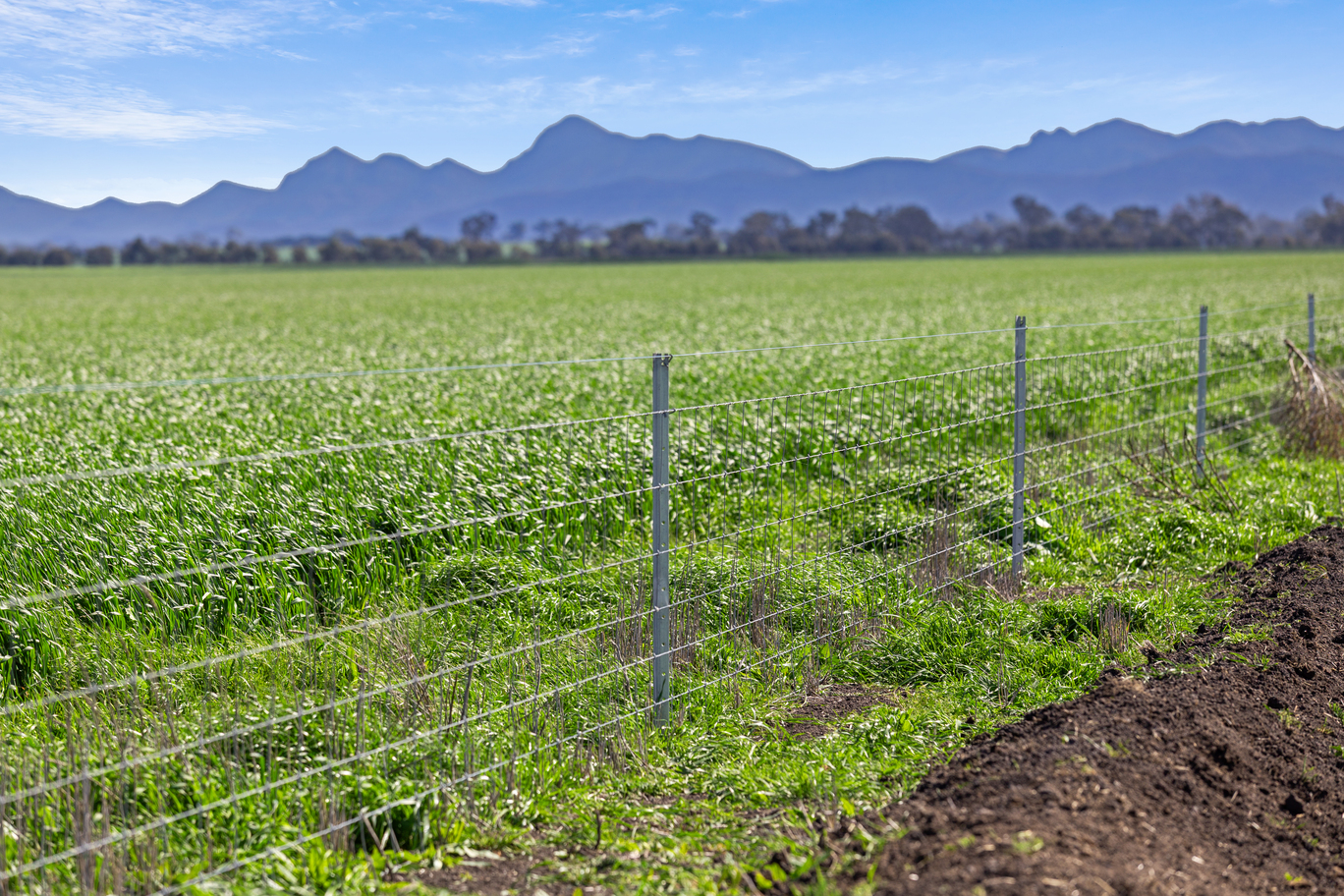
Fencing quality affects both livestock management efficiency and ongoing maintenance budgets. Victorian farming operations typically require substantial fencing infrastructure to manage livestock movements and maintain biosecurity. Properties with well-maintained fencing demonstrate operational advantages and lower immediate capital requirements.
Irrigation infrastructure for properties in northern districts represents substantial value and requires expert assessment. Channel systems, pumping stations, pipelines, and field distribution networks all require ongoing maintenance and periodic replacement. Understanding infrastructure condition and estimating remaining useful life proves essential for accurate property valuation.
Our Risk Reduction services include comprehensive infrastructure assessment to identify potential issues before they become expensive problems after acquisition.
Essential Due Diligence for Victorian Agricultural Properties
Regulatory and Compliance Framework
Victorian agricultural properties operate within complex regulatory environments spanning planning, environmental protection, water management, and agricultural production. Understanding these regulatory obligations proves essential for avoiding compliance issues that could constrain operations or require expensive remediation.
Planning regulations govern land use, building development, and subdivision potential. Properties in different planning zones face varying restrictions on agricultural activities, building construction, and non-agricultural diversification. Verifying that intended farming operations comply with planning requirements prevents costly surprises after acquisition.
Environmental regulations address native vegetation management, waterway protection, and threatened species conservation. Properties with environmental obligations may face operational constraints or require ongoing management activities to maintain compliance. Conversely, properties with opportunities for environmental works may access grant funding or generate carbon offset revenue.
Water licensing and compliance requirements apply to properties utilizing surface water or groundwater resources. Ensuring all water use operates under appropriate licenses and meets reporting requirements protects buyers from regulatory penalties and access restrictions. Understanding any outstanding compliance issues proves essential during due diligence.
Biosecurity obligations require property owners to manage declared pests and diseases according to regulatory requirements. Properties with established biosecurity issues may require substantial remediation investment to achieve compliance. Our due diligence services identify these potential obligations before buyers commit to acquisition.
Financial Performance Analysis
Understanding property financial performance requires analyzing historical production records, income statements, and management practices that influence profitability. Victorian agricultural properties vary enormously in financial performance even within similar regions and farming systems, reflecting management quality, investment levels, and operational efficiency.
Production records over multiple seasons reveal property performance under varying climatic conditions. Properties demonstrating consistent production across different years typically justify premium valuations compared to holdings showing high variability. Understanding yield potential, stocking rates, and production quality helps buyers project future financial performance.
Cost structure analysis identifies operational efficiency levels and potential improvement opportunities. Well-managed properties demonstrate appropriate input utilization without excessive spending, while holdings with inefficient cost structures may offer value-enhancement potential for buyers with operational expertise. Comparing property costs to industry benchmarks reveals relative efficiency.
Debt servicing capacity represents a critical consideration when evaluating acquisition financing. Properties must generate sufficient surplus after operating costs to meet loan repayments while maintaining adequate working capital reserves. Our Valuation & Financial Analysis services model debt servicing capacity under various scenarios to ensure proposed acquisitions remain financially viable across different conditions.
Key Factors Driving Victorian Rural Property Values
- Regional Reputation and Market Recognition: Properties in regions with strong reputations for quality agricultural production command premium valuations reflecting market positioning advantages and buyer confidence
- Water Security and Reliability: Secure access to reliable water resources through either high-reliability allocations or dependable rainfall patterns represents the single most important value driver for many Victorian agricultural properties
- Soil Quality and Agricultural Capability: Productive soils with appropriate characteristics for target farming systems enable superior returns and support premium property valuations compared to holdings with soil limitations
- Infrastructure Development and Condition: Properties with well-maintained, modern infrastructure demonstrate operational advantages and lower capital expenditure requirements that justify premium pricing
- Scale Appropriateness for Enterprise Type: Properties offering appropriate scale for intended farming systems achieve optimal efficiency, while undersized or oversized holdings face economic constraints
- Market Access and Logistics: Proximity to processing facilities, grain receival sites, livestock sale yards, and export infrastructure affects operational costs and property desirability
How Agribusiness Horizons Supports Victorian Property Transactions
We understand that acquiring rural real estate Victoria properties involves unique complexities specific to the state’s diverse agricultural systems and regulatory environment. Our specialized expertise spans Victoria’s major farming regions, providing buyers with comprehensive support throughout the acquisition process from initial identification through successful settlement and beyond.
Property identification leverages our extensive networks throughout Victorian agricultural communities. We maintain relationships with farming families, financial institutions, and industry participants that provide early access to quality properties before public marketing commences. This network advantage helps buyers secure premium assets without competing against broader market demand.
Comprehensive evaluation services combine agronomic assessment, financial analysis, and strategic planning to determine whether specific properties align with buyer objectives. Our agricultural specialists evaluate production potential, assess infrastructure condition, and identify any management challenges requiring attention. Financial modeling quantifies expected returns under various scenarios, helping buyers understand risk-return profiles.
Negotiation and transaction management draws on our proven processes and agricultural expertise. We coordinate with legal advisors, financing specialists, and technical consultants to ensure all transaction elements receive appropriate attention. Our Agribusiness Transactions services focus on protecting buyer interests while facilitating efficient execution.
Our Marketing & Sales Strategy services for sellers position properties to attract qualified buyers through sophisticated campaigns highlighting unique features and competitive advantages. We understand that Victorian agricultural properties appeal to diverse buyer profiles, from established farming families to investors seeking exposure to the agricultural sector.
Sustainable Agriculture and Environmental Stewardship
Modern Victorian agricultural operations increasingly emphasize environmental sustainability alongside economic performance. Properties demonstrating strong environmental management often command premium valuations while positioning favorably for evolving market preferences and regulatory requirements.
Soil health management forms the foundation of sustainable farming systems throughout Victoria. Practices including strategic tillage, diverse crop rotations, and integrated nutrient management enhance long-term productivity while reducing environmental impacts. Properties with documented soil improvement programs demonstrate commitment to sustainability and typically maintain superior production capacity.
Biodiversity conservation through native vegetation retention and wildlife habitat creation contributes to ecosystem health while potentially generating carbon offset opportunities. Victoria’s carbon farming programs enable landholders to monetize environmental services through emission reduction projects. Properties with established programs or clear development pathways may access additional revenue streams supplementing traditional farming income.
Water use efficiency gains importance as resource constraints tighten across irrigation regions. Modern irrigation technologies, soil moisture monitoring, and crop selection strategies that optimize water productivity enhance both environmental outcomes and operational economics. Properties incorporating efficient water management demonstrate superior resource stewardship and operational sophistication.
Regenerative agriculture approaches emphasizing ecosystem restoration and holistic management gain momentum throughout Victorian farming communities. These practices align with both environmental objectives and emerging market preferences for sustainably-produced food. Properties managed under regenerative frameworks may access premium markets and diverse revenue streams.
Market Dynamics Influencing Victorian Property Values
Understanding broader market forces helps buyers evaluate whether rural real estate Victoria opportunities represent fair value and sound long-term investments. Multiple factors influence property valuations across different timeframes and regional markets throughout the state.
Agricultural commodity prices significantly affect farmland values, with sustained periods of favorable pricing typically driving increased buyer demand and rising property values. Dairy industry conditions particularly influence Gippsland and northern irrigation district markets, while grain prices affect Wimmera and Mallee valuations. Understanding commodity fundamentals helps inform acquisition timing decisions.
Interest rate environments influence both buyer purchasing power and comparative investment returns. Lower rates enhance property affordability and make farming returns more competitive relative to alternative investments. Rising rates produce opposite effects, potentially constraining buyer demand and softening markets.
Water market dynamics profoundly affect irrigation district property values. Water allocation prices fluctuate based on supply conditions, competing demands, and seasonal factors. Properties with substantial water entitlements experience value fluctuations reflecting both land productivity and water asset values. Understanding these dual value components proves essential when evaluating irrigation properties.
Metropolitan growth pressures affect property markets in regions surrounding Melbourne and regional centers. Peri-urban agricultural land faces potential future rezoning opportunities that may support alternative uses including residential development or rural lifestyle properties. These development prospects can create premiums above pure agricultural values, though realizing such potential often requires extended timeframes and involves substantial uncertainty.
Our Market Timing Analysis services help buyers understand current market positioning and identify optimal acquisition windows based on cyclical patterns and fundamental value drivers.
Technology and Innovation in Victorian Agriculture
Victorian agriculture increasingly embraces technological innovation to enhance productivity, manage environmental challenges, and improve operational efficiency. Properties equipped with modern technology infrastructure or suitable for advanced system adoption demonstrate stronger long-term value potential.
Precision agriculture technologies enable spatially-variable crop management that optimizes inputs and maximizes productivity across different soil zones. Satellite imagery, yield mapping, variable rate application, and automated guidance systems help farmers extract maximum value from every hectare. Properties in grain-producing regions increasingly incorporate these technologies to maintain competitiveness.
Data management systems underpin informed farm decision-making across diverse enterprises. Weather monitoring, soil sensors, and livestock tracking technologies generate information streams that support optimal management decisions. Properties with established data collection infrastructure provide incoming operators with knowledge advantages.
Automation technologies including robotic dairies, autonomous tractors, and remote monitoring capabilities reduce labor requirements while improving consistency. These innovations prove particularly valuable in Victoria where rural labor availability challenges many farming operations. Properties configured to accommodate emerging automation technologies position favorably for future operational models.
Genetic improvements in crops, pastures, and livestock continue delivering productivity gains across Victorian agriculture. Access to improved varieties, superior animal genetics, and breeding technologies enhances farm performance potential. Modern operations incorporate genetic technologies as standard practice, with properties supporting these approaches demonstrating operational sophistication.
Financing Victorian Agricultural Property Acquisitions
Securing appropriate financing represents a critical success factor for most agricultural property acquisitions. Victorian agricultural lending markets offer various structures tailored to different property types and farming systems, though buyers must understand lender perspectives and requirements to optimize financing outcomes.
Traditional bank financing remains the primary funding source for most acquisitions, with major agricultural lenders maintaining strong presences throughout Victoria. Loan structures typically reflect property quality, buyer equity contribution, and projected debt servicing capacity. Interest rates and loan-to-value ratios vary based on lender risk assessment and competitive positioning.
Specialized agricultural lenders understand farming enterprises and evaluate properties based on productive capacity rather than purely on land values. These lenders recognize that well-managed operations on quality land generate consistent cash flows supporting debt repayment. Building relationships with agricultural banking specialists enhances financing prospects and may provide access to better terms.
Working capital facilities supplement acquisition financing by providing operational funding for inputs, livestock purchases, and seasonal cash flow management. Victorian farming operations require substantial working capital due to extended production cycles where expenses precede revenue by months or even years. Adequate working capital reserves prove essential for operational success.
Government assistance programs occasionally provide support for beginning farmers, land improvement projects, or specific development initiatives. While these programs vary based on policy priorities, buyers should investigate whether current programs might provide financial support for planned activities. Our advisory services include identifying applicable assistance programs and supporting application processes.
Future Outlook for Victorian Agriculture
The trajectory for Victorian agricultural property markets appears influenced by multiple converging trends. Global food demand continues growing as populations expand and dietary preferences evolve toward higher-quality products. Victoria’s reputation for producing premium agricultural products positions the state favorably to supply discerning markets, supporting ongoing demand for productive farmland.
Climate adaptation increasingly shapes agricultural investment decisions throughout Victoria. Properties demonstrating resilience to variable rainfall, temperature extremes, and changing seasonal patterns attract growing buyer interest. Forward-thinking investors evaluate long-term climate projections alongside historical performance when selecting properties.
Infrastructure development including improved transport links, expanded processing capacity, and enhanced export facilities supports Victorian agriculture’s competitiveness. These investments reduce logistics costs and improve market access for farming operations. Properties benefiting from infrastructure improvements may experience value appreciation beyond that attributable to farming fundamentals alone.
Water resource management evolution will profoundly affect Victorian agriculture, particularly in irrigation districts. Balancing agricultural, environmental, and urban water demands creates ongoing policy challenges. Properties with secure, high-reliability water access position favorably regardless of how these tensions resolve.
Urban proximity creates both opportunities and challenges for Victorian agricultural properties near metropolitan areas. While development pressure may eventually support alternative land uses, maintaining agricultural production zones near cities provides food security and environmental benefits. Understanding planning policy directions helps buyers assess long-term prospects for peri-urban agricultural land.
Conclusion: Achieving Success in Victorian Rural Property Investment
Victoria’s agricultural property sector offers compelling opportunities for investors who approach acquisitions systematically and understand the state’s diverse farming systems. Success requires comprehensive evaluation spanning agronomic assessment, financial analysis, regulatory review, and strategic vision development. The right property acquisition can deliver attractive returns while supporting meaningful contribution to Victoria’s agricultural industry.
At Agribusiness Horizons, we bring specialized expertise to every rural real estate Victoria transaction. Our agricultural knowledge, financial analysis capabilities, and deep understanding of Victorian farming systems position us uniquely to guide buyers through sophisticated acquisitions. We coordinate comprehensive due diligence, facilitate complex negotiations, and support smooth transitions that protect buyer interests while achieving successful outcomes.
Consider these important questions as you evaluate Victorian agricultural property opportunities: How does the property’s regional context, including climate patterns and water availability, position it for consistent performance across varying conditions? What infrastructure improvements or management changes could enhance productivity and unlock additional value? Does the property’s scale, enterprise suitability, and resource base align with your operational capability and long-term strategic objectives?
Whether you’re seeking your first agricultural property or expanding an established farming operation, our team provides the expertise and market intelligence essential for successful acquisitions. We understand that rural property investments represent both commercial opportunities and lifestyle choices, requiring balanced evaluation of multiple factors. Contact Agribusiness Horizons today to discuss your agricultural property objectives and access our comprehensive advisory services. Reach Rawdon Briggs directly at +61 428 651 144 or [email protected] for personalized guidance on finding and acquiring optimal rural property investments throughout Victoria’s diverse agricultural regions.