Large Australian Farms for Sale: Guide to Property Investment
Why Consider Agricultural Land Investment
The market for large Australian farms for sale presents significant opportunities for investors, agricultural operators, and family offices seeking to diversify their portfolios with tangible assets. Australia’s agricultural sector remains a cornerstone of the national economy, with expansive farmlands spanning diverse climate zones and supporting a wide range of agricultural enterprises. For those considering rural property acquisition, understanding the nuances of this specialised market is essential.
At Agribusiness Horizons, we witness firsthand the growing interest in substantial agricultural holdings across Queensland, New South Wales, Victoria, and the Northern Territory. Prospective buyers are attracted to Australian farmland for its productive capacity, water security, and potential for operational diversification. Whether you’re an experienced agricultural operator looking to expand or an investor seeking alternative assets, the current availability of premium rural properties warrants serious consideration.
Understanding the Agricultural Property Market
Current Trends in Rural Property Acquisition
The market for large Australian farms for sale continues to show resilience despite broader economic fluctuations. Agricultural land has historically maintained value through various market cycles, offering both capital appreciation potential and income generation through operational activities. This stability attracts domestic and international investors seeking to secure substantial rural holdings in regions with reliable rainfall, water access rights, and established infrastructure.
Several factors contribute to the current market dynamics for substantial farmland properties. Consumer preferences for Australian-grown produce, both domestically and internationally, support demand for quality agricultural operations. Meanwhile, technological advancements in farming practices enhance the productive capacity and management efficiency of large-scale properties, making Australian farms particularly attractive to forward-thinking agricultural operators.
Market interest remains strong across various agricultural sectors, including cattle stations, broad-acre cropping enterprises, horticultural operations, and mixed farming businesses. Properties with secure water entitlements or irrigation infrastructure command particular attention, reflecting growing awareness of climate variability and its impact on agricultural production.
Key Regions for Agricultural Investment
When exploring large Australian farms for sale, understanding regional differences becomes crucial for making informed investment decisions. Each agricultural region offers distinct advantages based on climate patterns, soil types, infrastructure access, and proximity to markets.
Queensland presents extensive opportunities in the cattle industry, with substantial grazing properties available across central and northern regions. The state also features premium horticultural zones along the coast, where tropical and subtropical fruits thrive. Inland agricultural areas support grain production and mixed farming enterprises, particularly in regions with reliable water access.
New South Wales offers diverse agricultural prospects, from the rich farming country of the Riverina to the productive grazing lands of the Central West. Properties in these regions benefit from established transport networks and proximity to major population centres, providing market access advantages for agricultural products.
Victoria’s high-rainfall zones support dairy operations and intensive agricultural production, while the state’s northern irrigation districts offer opportunities in horticultural enterprises and annual cropping. The combination of reliable water resources and fertile soils makes Victorian agricultural properties highly sought after.
The Northern Territory represents the frontier of Australian agriculture, with substantial cattle stations and emerging opportunities in tropical crop production. While these properties may present greater operational challenges, they also offer scale advantages that appeal to certain investors and agricultural operators.
Key Considerations When Buying Large-Scale Farmland
When evaluating large Australian farms for sale, several critical factors deserve thorough consideration. Understanding these elements helps potential buyers identify properties that align with their investment objectives and operational capabilities.
- Water Security and Rights: Access to reliable water resources represents perhaps the most crucial consideration for agricultural property acquisition. Evaluate both current water entitlements and future security, including irrigation infrastructure, storage capacity, and regulatory frameworks governing water access.
- Soil Quality and Land Capability: Conduct comprehensive soil assessments to understand productivity potential and limitations. Different agricultural enterprises require specific soil characteristics, and remediation costs for soil issues can significantly impact investment returns.
- Operational Infrastructure: Assess existing improvements including buildings, fencing, yards, machinery sheds, and handling facilities. The condition and functionality of these assets affect both immediate operational capability and future capital requirements.
- Market Access and Logistics: Consider proximity to processing facilities, transport routes, and export channels. Properties with advantageous locations relative to supply chains often command premium values but may deliver proportionately higher returns.
- Climate Resilience: Evaluate historical weather patterns and future climate projections for the region. Properties demonstrating adaptability to variable conditions typically represent lower-risk investments in the agricultural sector.
The quality and comprehensiveness of due diligence performed prior to acquisition directly influences investment outcomes. Working with agricultural property specialists who understand these considerations helps buyers navigate complex assessment processes and make well-informed decisions.
Agricultural Property Types Available
Cattle Stations and Grazing Properties
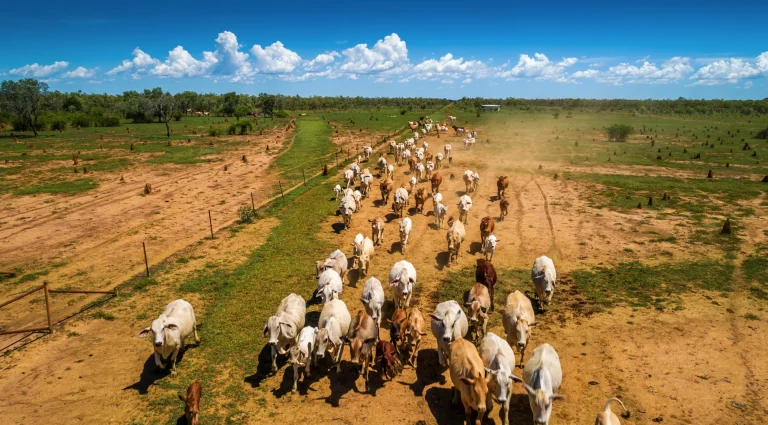
Among large Australian farms for sale, cattle stations represent some of the most extensive agricultural holdings available. These properties span thousands of hectares across northern Australia, Queensland, and parts of New South Wales, supporting beef cattle production through primarily pastoral grazing systems. The scale of these operations offers efficiency advantages but requires specialised management expertise.
Prospective buyers should evaluate carrying capacity, water point distribution, fencing quality, and livestock handling infrastructure when considering grazing properties. Access to abattoirs and livestock transport facilities also influences operational viability and should factor into acquisition decisions.
Broad-Acre Cropping Enterprises
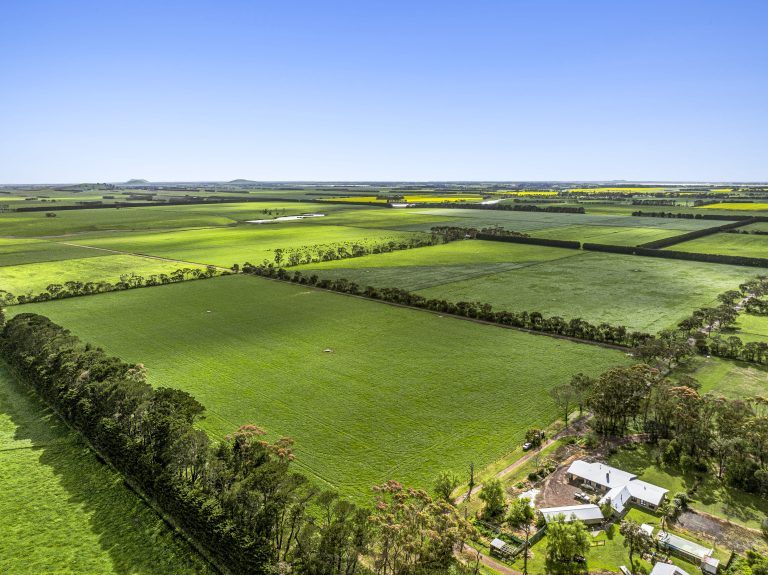
Broad-acre cropping properties feature prominently among large Australian farms for sale, particularly across the wheat belt regions of Western Australia, South Australia, Victoria, and New South Wales. These operations specialise in grain production, often incorporating rotational cropping systems that may include wheat, barley, canola, and legumes.
Investment considerations for cropping enterprises include rainfall reliability, soil fertility, drainage characteristics, and machinery requirements. Properties with expanded storage capacity and efficient handling systems typically command premium values but offer operational advantages that can justify the investment.
Horticultural Operations
Intensive horticultural enterprises represent a specialised segment of the agricultural property market. These operations focus on high-value crops such as fruits, nuts, vegetables, and wine grapes, often incorporating sophisticated irrigation systems and controlled growing environments.
Horticultural properties typically require higher capital investment per hectare than extensive farming operations but can generate proportionately higher returns. Water security becomes particularly critical for these enterprises, as does access to seasonal labour and proximity to processing facilities or fresh produce markets.
Mixed Farming Operations
Many large Australian farms for sale fall into the mixed farming category, combining livestock production with cropping activities. This operational diversity can provide risk management advantages through income stream diversification and more efficient resource utilisation across seasonal cycles.
Mixed farming properties offer flexibility for operational adaptation but require broader management expertise. Potential buyers should evaluate how well the property configuration supports integrated production systems and whether existing infrastructure accommodates multiple agricultural activities.
The Acquisition Process for Large Agricultural Properties
Valuation and Financial Analysis
Professional valuation represents a critical step when considering large Australian farms for sale. Agricultural property values reflect multiple factors including productive capacity, water entitlements, infrastructure improvements, and location advantages. Comprehensive valuation incorporates comparable sales analysis alongside income-based approaches that consider operational potential.
Financial analysis should extend beyond purchase price to encompass operational projections, capital requirements, and risk assessment. Understanding the revenue generation potential relative to ongoing costs provides insight into investment viability and informs appropriate purchase price parameters.
At Agribusiness Horizons, our valuation methodology incorporates agricultural economics, property market analytics, and performance modelling. This approach helps clients understand both current value and future potential when evaluating substantial rural property opportunities.
The Role of Expert Advisors
Navigating the acquisition of large agricultural properties requires specialised expertise across multiple disciplines. Agricultural property specialists bring market knowledge and sector understanding that proves invaluable throughout the transaction process.
Legal advisors with experience in rural property transactions help address issues related to land tenure, water entitlements, access rights, and potential encumbrances. Financial specialists assist with funding structures and tax considerations specific to agricultural investments. Agricultural consultants provide operational insights relevant to particular farming systems or regional conditions.
Working with an integrated advisory team ensures comprehensive coverage of all aspects relevant to substantial farmland acquisition. This approach minimises risk while identifying opportunities that might otherwise remain unrecognised during the evaluation process.
Due Diligence Process
When pursuing large Australian farms for sale, thorough due diligence directly influences investment outcomes. This process typically encompasses physical inspection, document review, financial analysis, and regulatory assessment.
Physical inspection should involve both general property evaluation and specialised assessment of elements relevant to intended operations. Soil testing, water infrastructure examination, boundary verification, and improvement assessment all form part of comprehensive physical due diligence.
Document review encompasses title searches, lease agreements, water licences, environmental compliance records, and operational permits. Financial analysis examines historical performance alongside future projections based on planned operations. Regulatory assessment identifies compliance requirements and potential limitations affecting property utilisation.
The quality of information gathered during due diligence provides the foundation for informed decision-making. Investing appropriate time and resources in this process helps avoid costly surprises and ensures alignment between acquisition targets and investment objectives.
Comparison of Agricultural Property Sectors
| Property Type | Operational Intensity | Water Requirements | Capital Investment | Management Complexity | Market Volatility |
|---|---|---|---|---|---|
| Cattle Stations | Low to Moderate | Moderate | Moderate | Moderate | Moderate |
| Broad-Acre Cropping | Moderate | Moderate to High | High | High | High |
| Horticultural Operations | Very High | Very High | Very High | Very High | Moderate to High |
| Mixed Farming | Moderate to High | Moderate to High | Moderate to High | High | Moderate |
| Dairy Enterprises | High | High | High | High | High |
This comparison provides general guidance when considering large Australian farms for sale across different agricultural sectors. Individual properties within each category may present characteristics that differ from these broad classifications based on specific location, scale, and operational systems.
How Agribusiness Horizons Facilitates Large Farm Transactions
Comprehensive Transaction Support
Agribusiness Horizons specialises in facilitating the sale and acquisition of substantial agricultural properties across Australia. Our approach combines deep market knowledge with tailored service delivery designed to address the unique aspects of each transaction.
For sellers of large Australian farms, we develop customised marketing strategies that highlight the distinctive features and value drivers of each property. Our global network connects sellers with qualified buyers actively seeking agricultural investment opportunities, while our transaction management services ensure smooth progress from initial marketing through to settlement.
Buyers benefit from our property identification services, which match acquisition criteria with available opportunities, including off-market properties not publicly advertised. Our due diligence support helps buyers thoroughly evaluate potential acquisitions, while our negotiation expertise secures favourable terms and conditions.
Throughout the transaction process, our team provides end-to-end support covering every aspect from initial consultation through to post-settlement transition. This comprehensive approach minimises complications while maximising outcomes for all parties involved.
Specialised Market Knowledge
Our team brings specialised expertise in high-value agricultural property transactions, with particular focus on water rights, natural capital considerations, and operational optimisation. This knowledge proves invaluable when evaluating large Australian farms for sale, especially those with complex operational components or strategic development potential.
Our market intelligence capabilities provide clients with insights regarding pricing trends, buyer demand patterns, and regional development initiatives that may affect property values. This information helps shape transaction strategies and supports well-informed decision-making throughout the acquisition or divestment process.
By combining local market knowledge with global capital insights, we help clients understand how broader economic factors influence the agricultural property sector. This perspective proves particularly valuable when timing transactions to align with favourable market conditions or when positioning properties to attract premium valuations.
Future Outlook for Agricultural Property Investment
Long-Term Investment Considerations
Agricultural land represents a tangible asset class with fundamental characteristics that appeal to long-term investors. The productive capacity of well-managed farmland typically maintains or increases over time, supporting both capital preservation and income generation potential.
When evaluating large Australian farms for sale as long-term investments, consider how factors such as climate adaptation, technological integration, and market access may influence future property values. Properties demonstrating resilience to changing conditions and flexibility for operational adaptation typically present lower risk profiles for long-term holders.
The potential for natural capital monetisation through carbon sequestration, biodiversity enhancement, or renewable energy development represents an emerging consideration for agricultural property investors. Properties with characteristics supportive of these opportunities may offer additional value streams beyond traditional agricultural production.
Strategic Acquisition Approach
Developing a strategic approach to agricultural property acquisition helps align investment decisions with long-term objectives. This strategy should consider portfolio diversification across geographical regions and production systems to mitigate risk while capitalising on sector opportunities.
Timing considerations influence acquisition outcomes, with market knowledge helping identify advantageous entry points relative to property values and funding costs. Staging acquisition over time allows for operational integration and provides flexibility to respond to changing market conditions.
At Agribusiness Horizons, we help clients develop acquisition strategies that consider both immediate opportunities and long-term positioning. This approach supports purposeful portfolio development aligned with specific investment objectives and risk parameters.
Conclusion
The market for large Australian farms for sale presents considerable opportunities for investors and operators who approach acquisition with appropriate knowledge and strategic purpose. Agricultural land continues to demonstrate appealing investment characteristics through various economic cycles, combining income potential with capital preservation features.
Navigating the complexities of substantial rural property transactions benefits substantially from specialised expertise. From initial property identification through due diligence, negotiation, and settlement, working with agricultural property specialists helps secure favourable outcomes while managing transaction risks effectively.
Have you considered how agricultural property might complement your existing investment portfolio? What operational synergies might exist between your current activities and potential agricultural acquisitions? How might strategic farmland ownership position your business for future opportunities in food production or natural capital markets?
For expert guidance regarding large Australian farms for sale, contact Agribusiness Horizons. Our team offers comprehensive support throughout the agricultural property transaction process, helping clients identify and secure rural properties aligned with their specific investment objectives.