Cattle Station NT Investment Guide: Opportunities in Northern Territory Pastoral Country
Introduction
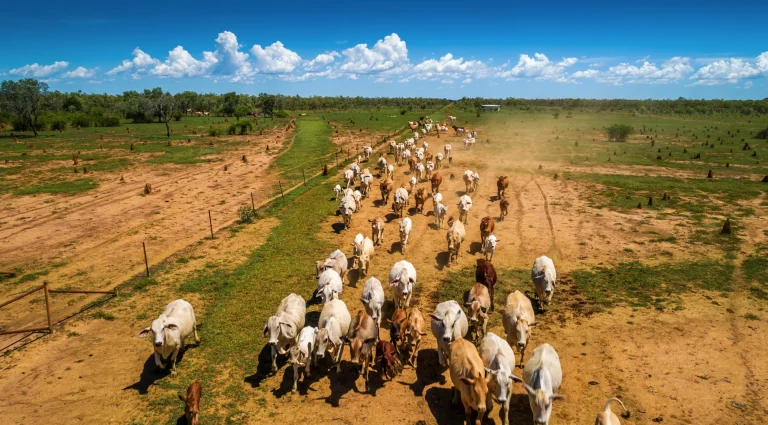
The Northern Territory’s vast pastoral landscapes represent some of Australia’s most distinctive agricultural investments, with cattle station NT properties spanning territories larger than many European countries. These extensive grazing operations produce premium tropical beef for domestic and international markets, operating across remote yet productive rangelands. Northern Territory cattle stations function on impressive scales where properties measure in hundreds of thousands of hectares, running substantial breeding herds adapted to tropical conditions and seasonal challenges unique to Australia’s Top End.
At Agribusiness Horizons, we specialize in pastoral property transactions across the Northern Territory, bringing decades of experience facilitating cattle station acquisitions. Whether you’re an established pastoral operator, institutional investor, or international buyer, we provide comprehensive advisory services throughout your acquisition journey. This guide examines cattle station NT opportunities, regional dynamics, operational considerations, and strategic approaches to investing successfully in this distinctive agricultural sector.
Understanding Northern Territory’s Pastoral Industry
The Northern Territory pastoral industry forms the backbone of the region’s agricultural economy, with beef cattle production predominating across diverse climatic zones. The industry operates under a unique land tenure system where most cattle station NT properties function on pastoral leases rather than freehold title. These pastoral leases grant exclusive grazing rights across vast Crown land tracts for extended terms, providing security for long-term investment while maintaining public ownership.
Northern Territory cattle stations operate within challenging yet rewarding environmental contexts characterized by pronounced wet and dry seasons. The wet season brings monsoonal rainfall transforming landscapes into productive grasslands, while the dry season requires careful water point management. This seasonal rhythm dictates mustering schedules, marketing decisions, and herd management strategies differing substantially from temperate operations.
The territory’s industry has evolved sophisticated production systems optimized for tropical conditions, with Brahman-influenced genetics dominating due to heat tolerance and parasite resistance. Properties range from breeding operations in higher-rainfall coastal regions to backgrounding enterprises in areas offering improved pasture potential.
Regional Variations Across Northern Territory Pastoral Zones
The Northern Territory’s cattle country encompasses distinctly different environments with unique advantages. The Top End region receives the highest rainfall and supports productive native pasture growth during the wet season. Properties here typically carry higher stocking rates while managing disease pressure in higher-rainfall environments.
The Barkly Tablelands represents premier cattle fattening country, with vast Mitchell grass plains offering exceptional finishing capacity when conditions align. This region’s properties attract operators seeking backgrounding capacity, with natural fertility providing competitive advantages. The Barkly’s relative proximity to processing facilities offers logistical benefits for marketing.
The Victoria River District and Central Australian regions present more arid conditions requiring larger land areas per beast. While carrying lower stocking rates, these regions offer large-scale operations where economies of scale deliver acceptable returns despite reduced per-hectare productivity. Climate variability presents greater management challenges, requiring conservative stocking and flexible marketing approaches.
Water Infrastructure and Development Potential
Water security represents the single most critical factor determining carrying capacity and operational viability across Northern Territory cattle stations, with permanent water point distribution directly limiting effective utilization of available grazing resources. Most established cattle station NT properties feature bore-fed watering systems distributing stock water across strategic locations, enabling livestock access to productive pasture areas that would otherwise remain ungrazeable during dry season months. The quality, quantity, and reliability of groundwater resources vary considerably across different geological formations, with comprehensive bore testing and water analysis forming essential components of thorough property due diligence.
Infrastructure development potential offers significant value creation opportunities for buyers willing to invest capital in strategic water point expansion, pasture improvement, and handling facility upgrades. Many Northern Territory cattle stations retain substantial undeveloped potential where additional bore development could unlock previously underutilized grazing areas, effectively increasing carrying capacity and property productivity without additional land acquisition. The economics of infrastructure investment require careful analysis, balancing capital costs against projected productivity gains and ensuring adequate return on investment across realistic time horizons.
Solar-powered pumping systems have revolutionized water infrastructure on remote cattle stations, eliminating fuel transport costs and maintenance requirements associated with traditional diesel or windmill installations while providing reliable water supply throughout extended dry seasons. Modern water storage solutions including tanks and dams help buffer against bore failures or dry season shortages, enhancing operational resilience and livestock welfare during challenging periods. Properties featuring contemporary water infrastructure attract premium buyer interest, reflecting both immediate operational advantages and reduced capital expenditure requirements for incoming owners.
Strategic infrastructure assessment should evaluate not only existing installations but also development potential, aquifer characteristics, power supply options, and regulatory approvals required for expansion projects. Understanding water resource sustainability and environmental management obligations ensures proposed developments align with both operational objectives and regulatory compliance requirements governing pastoral land management in the Northern Territory.
Herd Quality, Genetics, and Enterprise Systems
Cattle genetics and herd structure fundamentally influence property productivity, with superior breeding stock commanding significant value. Established cattle station NT breeding programs incorporating proven genetics deliver competitive advantages through improved growth rates and market suitability. Brahman and Brahman-composite genetics dominate commercial cattle populations, offering tropical adaptation with acceptable carcase characteristics.
Herd structure reflecting appropriate ratios indicates well-managed operations positioned for sustainable production. Properties carrying excessive aged cows may require significant herd rebuilding investment. Comprehensive stock records documenting performance, breeding history, and health treatments provide valuable management information while demonstrating systematic herd improvement.
Enterprise systems typically focus on breeding operations producing weaners or backgrounded steers for southern feedlots. Some properties extend enterprises through backgrounding or finishing phases where conditions permit. The transition toward genetics offering improved eating quality reflects evolving industry dynamics, with processors increasingly differentiating payments based on carcase traits.
Operational Challenges and Management Requirements
Managing a cattle station NT operation demands specialized skills substantially different from intensive southern farming. Vast scales require sophisticated logistics, with mustering operations covering enormous areas requiring helicopter support, contract teams, and extensive coordination. Seasonal timing proves essential, with activities concentrated during dry months when cattle congregate around permanent water and ground conditions permit vehicle access.
Staff accommodation and retention present ongoing challenges in remote locations, with properties providing housing for managers and families while operating far from regional centers. Successful operators develop strong workplace cultures and competitive packages attracting capable personnel despite isolation. Properties featuring quality accommodation and established teams represent significant advantages for incoming owners.
Biosecurity and disease management require constant vigilance, with tropical conditions favoring parasite loads absent from temperate regions. Vaccination programs, drenching schedules, and quarantine procedures form essential herd health components. Seasonal variability affects operational activities and financial performance, with drought years requiring destocking decisions or acceptance of reduced trading while maintaining core breeding herds. Experienced operators develop conservative stocking strategies and adapt marketing plans responsive to conditions rather than rigid calendar approaches.
Financial Performance and Investment Returns
Cattle station profitability reflects complex interactions between carrying capacity, seasonal conditions, cattle prices, operational costs, and management efficiency, creating performance variability requiring patient capital. Pastoral operations typically turn off cattle across multi-year cycles, with breeding operations experiencing cash flow concentrated around weaner sales. Understanding these cash flow patterns and planning working capital prevents financial stress between major sales events.
Operational costs include substantial fixed overheads for staff, accommodation, vehicles, and infrastructure that continue regardless of conditions. Variable costs including supplements and animal health products fluctuate with management decisions. The relationship between fixed and variable costs creates economies of scale favoring larger operations, partially explaining industry consolidation trends.
Returns typically combine modest cash yields with longer-term capital appreciation, appealing to investors seeking inflation hedging and tangible assets rather than maximum current income. Experienced buyers model returns across multiple scenarios incorporating seasonal outcomes, cattle price movements, and operational assumptions. Development potential through infrastructure investment, pasture improvement, or genetic upgrading provides value creation avenues beyond continuing existing practices.
How Agribusiness Horizons Supports Cattle Station Acquisitions
At Agribusiness Horizons, we bring specialized expertise in pastoral property transactions that extends well beyond conventional brokerage services, providing comprehensive support tailored to the unique characteristics of cattle station NT investment opportunities. Our transaction advisory begins with detailed consultation to understand your operational experience, investment objectives, management capabilities, and risk tolerance, ensuring we identify properties genuinely aligned with your requirements rather than presenting unsuitable listings. We maintain extensive networks throughout Australia’s pastoral industry, providing access to both publicly marketed properties and confidential off-market opportunities not broadly advertised to general markets.
Our due diligence coordination encompasses all critical dimensions of pastoral property assessment, including comprehensive infrastructure evaluation, water resource sustainability analysis, herd quality verification, land condition assessment, and regulatory compliance review. We engage specialist consultants where required, including rangeland scientists, hydrologists, livestock valuers, and legal advisors familiar with pastoral lease structures and Northern Territory regulatory frameworks. This thorough approach identifies potential issues before commitment, protecting your interests and ensuring informed decision-making based on comprehensive information rather than superficial property presentations.
Valuation services for cattle station properties require specialized methodologies accounting for carrying capacity, herd value, infrastructure condition, development potential, and comparable transactions within relevant markets. Our valuation framework incorporates multiple approaches including income capitalization based on sustainable trading performance, asset-based assessment of livestock and improvements, and market comparison with appropriately selected benchmark transactions. This rigorous methodology delivers defensible valuations supporting confident acquisition decisions and providing credible documentation for financing applications where debt funding forms part of your acquisition structure.
Expert negotiation on your behalf leverages our market intelligence, transaction experience, and industry relationships to secure favorable terms extending beyond headline pricing to include settlement structures, stock valuations, plant and equipment inclusions, and contract provisions protecting your position. We coordinate with legal teams, financial institutions, livestock agents, and regulatory authorities throughout the transaction process, managing documentation requirements and milestone tracking to ensure smooth progression toward successful settlement. Post-acquisition transition support helps new owners establish operational systems, connect with local contractors and service providers, and optimize enterprise performance from commencement of ownership.
When exploring cattle station NT opportunities, engaging professional advisory support from specialists understanding this unique sector’s characteristics, challenges, and investment dynamics substantially increases acquisition success likelihood. Contact our team at Agribusiness Horizons to discuss your pastoral property objectives and discover how our specialized capabilities deliver superior outcomes across all transaction stages.
Regulatory Framework and Pastoral Lease Structures
Northern Territory pastoral leases create distinctive legal characteristics requiring careful understanding. Pastoral leases grant exclusive grazing rights for defined terms while underlying ownership remains with the Crown. Leaseholders pay annual rents and must comply with land management obligations outlined in lease conditions and legislation.
Lease conditions specify minimum stocking requirements, vegetation management obligations, and environmental protection measures. Understanding these requirements ensures operational plans align with regulatory expectations. Most lease terms provide security for long-term investment, with renewal provisions typically available to compliant lessees.
Native title considerations overlay pastoral leases across much of the territory, creating co-existing rights where traditional owners maintain specific interests. Buyers should understand native title determinations affecting prospective properties, including Indigenous Land Use Agreements. Environmental regulations including weed management and land condition assessments form additional compliance dimensions, with responsible operators maintaining conservative stocking strategies and demonstrating environmental stewardship.
Market Dynamics and Transaction Trends
The cattle station NT property market operates within distinctive dynamics shaped by specialization, limited buyer pools, and significant capital requirements. Transaction volumes remain modest compared to intensive agricultural regions, with substantial properties changing hands irregularly. This creates both challenges and opportunities, with patient buyers sometimes securing favorable terms when vendor numbers exceed active purchasers.
Foreign investment interest features prominently, with international buyers attracted to large-scale beef production capacity and strategic positioning supplying Asian markets. Australian Government foreign investment approval processes apply above specified thresholds, requiring Foreign Investment Review Board approval for eligible transactions. Institutional capital including superannuation funds and family offices increasingly recognizes pastoral assets as strategic portfolio components offering inflation protection and diversification benefits.
Succession planning within family pastoral operations creates ongoing transaction flow as generational transitions prompt property sales where family members lack interest in continuing operations. These transactions sometimes offer opportunities for well-positioned buyers, particularly where vendors prioritize smooth transitions alongside price considerations.
Strategic Considerations for Different Buyer Categories
Established pastoral operators seeking expansion typically prioritize operational synergies, including management efficiency and breeding program integration. These buyers possess operational expertise and established infrastructure, potentially accepting properties requiring development.
Investment-focused buyers evaluate acquisitions through financial lenses emphasizing return on capital and portfolio characteristics. These buyers typically require professional management and prefer properties offering established systems and documented performance. Longer investment horizons suit the patient capital requirements of extensive cattle production.
International buyers often prioritize beef production capacity and strategic market positioning supplying Asian consumers. Understanding Australian regulatory frameworks and operational requirements proves essential for buyers unfamiliar with local contexts. First-time pastoral investors benefit substantially from professional guidance on enterprise economics, seasonal strategies, and realistic performance expectations.
Conclusion
Investing in a cattle station NT property represents a distinctive opportunity within Australian agricultural markets, offering large-scale beef production capacity, tangible asset characteristics, and participation in the territory’s established pastoral industry. The specialized nature of these transactions demands expert guidance from advisors understanding pastoral property valuation, operational requirements, regulatory frameworks, and market dynamics specific to Northern Territory cattle stations. Successful buyers approach acquisitions systematically, conducting thorough due diligence, engaging specialist consultants, and maintaining realistic expectations about pastoral enterprise economics and seasonal performance variability.
As you consider cattle station investment in the Northern Territory, several questions warrant careful reflection: Does your experience and management capability align with the specialized operational requirements of extensive tropical cattle production? How will your financial structure accommodate the cash flow patterns and working capital requirements inherent in pastoral enterprises? What infrastructure development or productivity improvements might enhance property performance under your ownership?
At Agribusiness Horizons, we provide comprehensive support for buyers navigating the cattle station NT market, from initial opportunity identification through post-settlement operational transition. Our specialized pastoral property expertise, extensive industry networks, and commitment to client outcomes position you for success in this rewarding yet complex investment sector. Contact Rawdon Briggs at +61 428 651 144 or reach out through our website at https://agribusinesshorizons.com/contact/ to discuss your pastoral property acquisition objectives. Let us help you identify, evaluate, and secure the right cattle station investment aligned with your strategic goals and operational capabilities.
Meta Description: Discover comprehensive insights on cattle station NT opportunities with expert guidance on regional characteristics, water infrastructure, herd management, and strategic acquisition approaches for Northern Territory pastoral investments.